
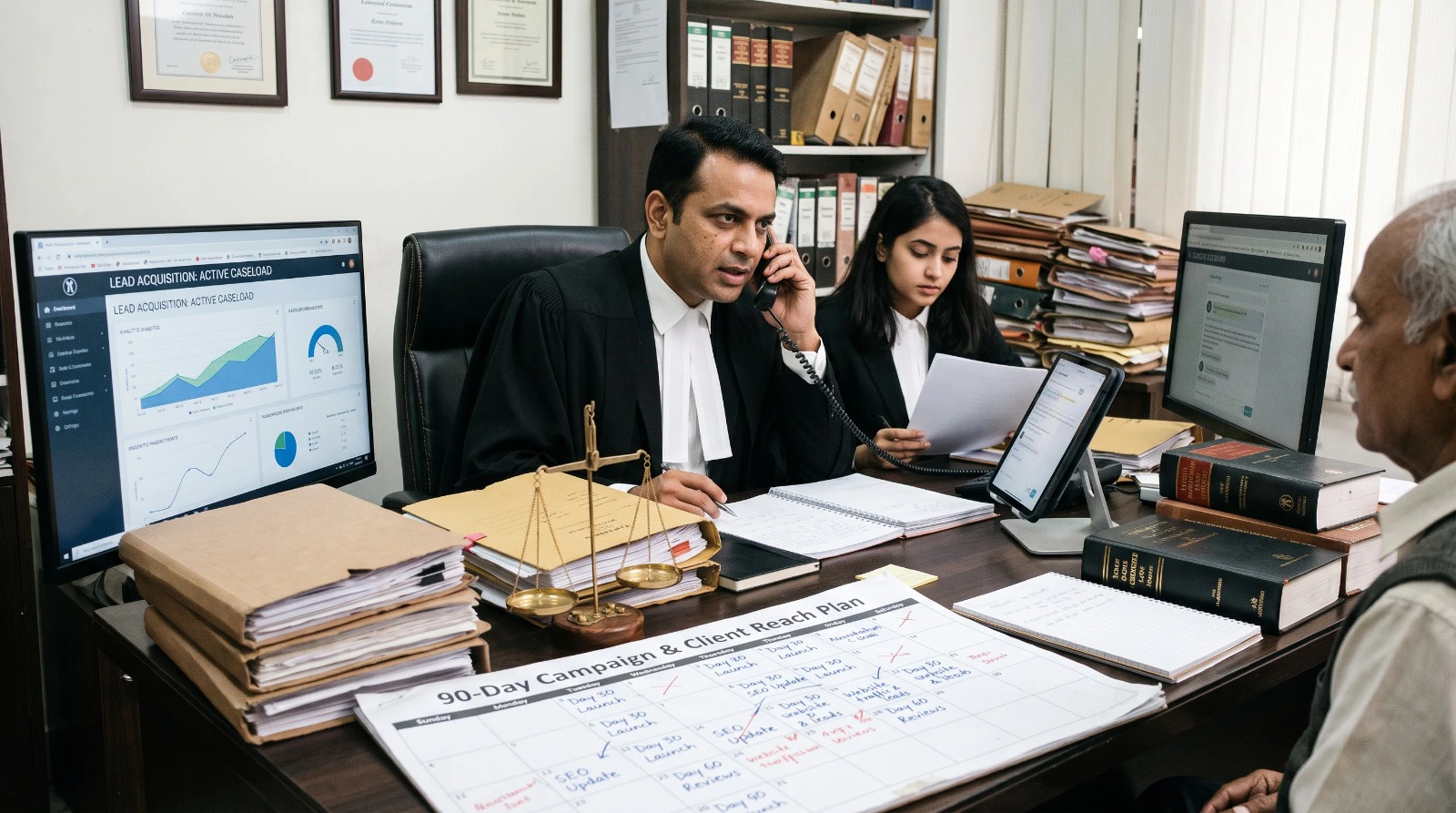
Clients hire a person they trust, not just a firm. Social media personal branding lets an advocate show expertise, build credibility, and stay visible through helpful, ethical content on LinkedIn, Instagram, YouTube, and other platforms. Backed by a strong website and Google Business Profile, and guided by a digital marketing agency, it becomes a steady source of enquiries.
Why Personal Branding Matters for Advocates
Legal services are built on trust. A client facing a property dispute, a family matter, or a business problem is not just choosing a firm. They are choosing the person who will stand beside them. Before they call, they look you up.
What they find on your social media profiles shapes that first impression. An advocate who shares clear, useful, and responsible content looks approachable and credible. An advocate with no presence, or an outdated one, looks unknown. This is why personal branding is now one of the most effective parts of digital marketing for advocates, and why many advocates work with a digital marketing agency to do it well.
What Is Personal Branding for an Advocate?
Your personal brand is what people think of when they hear your name: your areas of expertise, your values, your way of explaining things, and the reputation you carry. On social media, it is built through four things:
- Positioning:the practice area and clients you want to be known for.
- Presence: complete, professional profiles on the right platforms
- Content:regular, helpful posts, videos, and articles
- Engagement:thoughtful conversations with peers, clients, and the community.
Which Social Media Platforms Should Advocates Use?
You do not need to be everywhere. Choose one or two platforms and do them well.
- LinkedIn:the strongest platform for advocates. Ideal for professional credibility, thought leadership, referrals from other professionals, and business clients.
- YouTube:best for explainer videos on common legal questions. Videos also appear in Google search and build long-term trust.
- Instagram:useful for short educational reels, carousels, and a human side to your practice, especially in consumer-facing areas such as family or property law.
- Facebook:helpful for community reach, local groups, and sharing longer articles.
- X (Twitter):suited to legal news and commentary for those who enjoy public discussion.
- WhatsApp Channels:a simple way to share regular legal updates with people who choose to follow you.
These concerns are valid. Patient care will always come first. The goal is not to turn doctors into full-time content creators. It is to build a system where your digital presence runs with minimal time from you.
How to Build Your Advocate Personal Brand: 8 Steps
Step 1: Define your positioning
Decide who you want to help and with what. A property advocate who explains title verification clearly will be remembered far longer than a generalist who posts about everything. Write one sentence that completes this: “I help [type of client] with [type of legal problem].”
Step 2: Optimise your profiles
Use a clear, professional photo and the same name, photo, and bio across platforms. Write a headline that states your practice area, not just your title. Add a short bio about whom you help and how, plus a link to your website and contact details. On LinkedIn, use the Featured section to highlight your best articles or videos.
Step 3: Choose your content pillars
Pick three to four themes to repeat, so followers know what to expect from you:
- Educate:plain-language explainers on common legal questions
- Update:simple summaries of important law changes and court judgments
- Clarify:myths versus facts, and what to expect at each stage of a legal process
- Connect:professional milestones, events, talks, and your approach to client service
Step 4: Use formats people enjoy
Mix text posts, carousels, short videos, live question-and-answer sessions, and a monthly newsletter. Short videos of one to two minutes answering a single question are often the easiest way to build trust, because people see and hear you.
Step 5: Follow a simple posting rhythm
Consistency beats volume. Three to four quality posts a week on one main platform is enough to start. Plan a month of topics in advance so you never run out of ideas.
Step 6: Engage, do not just broadcast
Reply to comments, answer questions in general terms, and take part in discussions on other professionals' posts. Connect with fellow advocates, chartered accountants, real estate professionals, and business owners who may refer clients to you.
Step 7: Lead people to your website
Every profile should link to your website, and every article should have a clear next step, such as a contact form or WhatsApp button. Social media builds attention and trust, while your website converts it into enquiries.
Step 8: Measure and improve
Check which posts earn the most views, saves, comments, and profile visits. Do more of what works. Track how many enquiries come from social media each month.
10 Social Media Post Ideas for Advocates
- What documents to check before buying a property
- Five common mistakes people make after receiving a legal notice
- Myth versus fact: a common misunderstanding about your practice area
- What happens at your first consultation, step by step
- A simple explanation of a recent court judgment and why it matters
- Answers to the three questions clients ask you most
- A checklist for starting a business or signing an agreement
- How long a typical legal process takes, in general terms
- A short video introducing yourself and your approach
- Highlights from a seminar, talk, or professional event you attended
Ethics First: Rules Every Advocate Must Respect
Advocates in India are bound by Bar Council of India rules on advertising and solicitation. A compliant personal brand is informational, not promotional.Keep these principles in mind:
- Never share confidential details or identifiable information about clients or cases
- Avoid claims such as “best advocate,” guarantees of results, or comparisons with other advocates
- Do not directly solicit clients or advertise fees in a promotional way
- Add a note that your content is general information, not legal advice
- Be careful with client testimonials and case results
Check the current Bar Council of India and State Bar Council guidelines before you publish, and have your content reviewed.
Support Your Social Media Brand with Your Website and Google Presence
Social media works best when it is connected to the rest of your online presence:
- Website:a fast, mobile-friendly site with a page for each practice area, an About page, and clear contact options
- Google Business Profile: a complete profile so people searching for an advocate nearby can find and call you
- SEO and helpful articles:blog posts that answer client questions, with FAQ schema so Google and AI tools can quote you
- Reviews:honest client feedback on Google, collected within professional rules
- Consistent listings:the same name, address, and phone number everywhere online
Together, these let people who discover you on social media confirm your credibility, and let people who find you on Google see the person behind the practice.
How a Digital Marketing Agency Can Help
Personal branding takes consistent effort, and most advocates are too busy with cases to manage it. A specialist digital marketing agency can:
- Define your positioning and content pillars
- Optimise your LinkedIn, Instagram, YouTube and Facebook profiles
- Plan a monthly content calendar and create compliant posts, carousels and videos
- Build and manage your website, Google Business Profile and SEO
- Report clearly on reach, engagement and enquiries
When choosing a digital marketing agency, look for experience with professional services, a clear understanding of legal advertising rules, transparent reporting and realistic promises.
Common Personal Branding Mistakes Advocates Make
- Trying to be on every platform instead of mastering one or two
- Posting irregularly, then disappearing for months
- Sharing client details or case results, which breaks confidentiality and Bar Council rules
- Writing in heavy legal jargon that ordinary clients cannot follow
- Using social media only to promote, never to educate or engage
- Having social profiles that do not link to a website or contact option
Your First 30 Days
- Week 1: Define your positioning and optimise your main profiles
- Week 2:Choose your content pillars and plan the month's posts
- Week 3:Publish three to four posts and one short video, and start engaging
- Week 4:Review what worked, update your website and Google Business Profile, and plan the next month
Conclusion
A strong personal brand lets clients meet you before they ever walk into your office. By sharing helpful, ethical content on the right platforms, backing it with a professional website and Google presence, and staying consistent, you build the trust that turns followers into clients. A reliable digital marketing agency can guide the strategy and handle the work, so you can focus on your clients and your cases.
Build Your Advocate Brand with Yung Media
Yung Media is a digital marketing agency specialising in social media, SEO, AEO and GEO for professional services. We help advocates and law firms build a compliant personal brand and online presence, from profile optimisation and content creation to website and AI-search visibility.
Contact Yung Media today for a free personal branding and digital marketing review of your law practice.
Why is personal branding important for advocates?Clients choose an advocate they trust. A personal brand shows your expertise and approach before they ever contact you.
Which social media platform is best for advocates? LinkedIn is the strongest starting point for most advocates. YouTube and Instagram work well for explaining legal topics to individual clients.
Can advocates in India promote themselves on social media?Advocates are restricted by Bar Council of India rules. Informational and educational content is generally the accepted approach, but confirm the current rules before publishing.
How often should an advocate post on social media?Three to four quality posts a week on one main platform is a good start. Consistency matters more than volume.
Should an advocate hire a digital marketing agency for social media?It helps if you lack the time or skills. A digital marketing agency can plan, create, and manage compliant content while you focus on clients.
How long does personal branding take to work?Most advocates notice growing visibility within two to three months, and stronger trust and enquiries build over six months of steady activity.